
My Art Practice
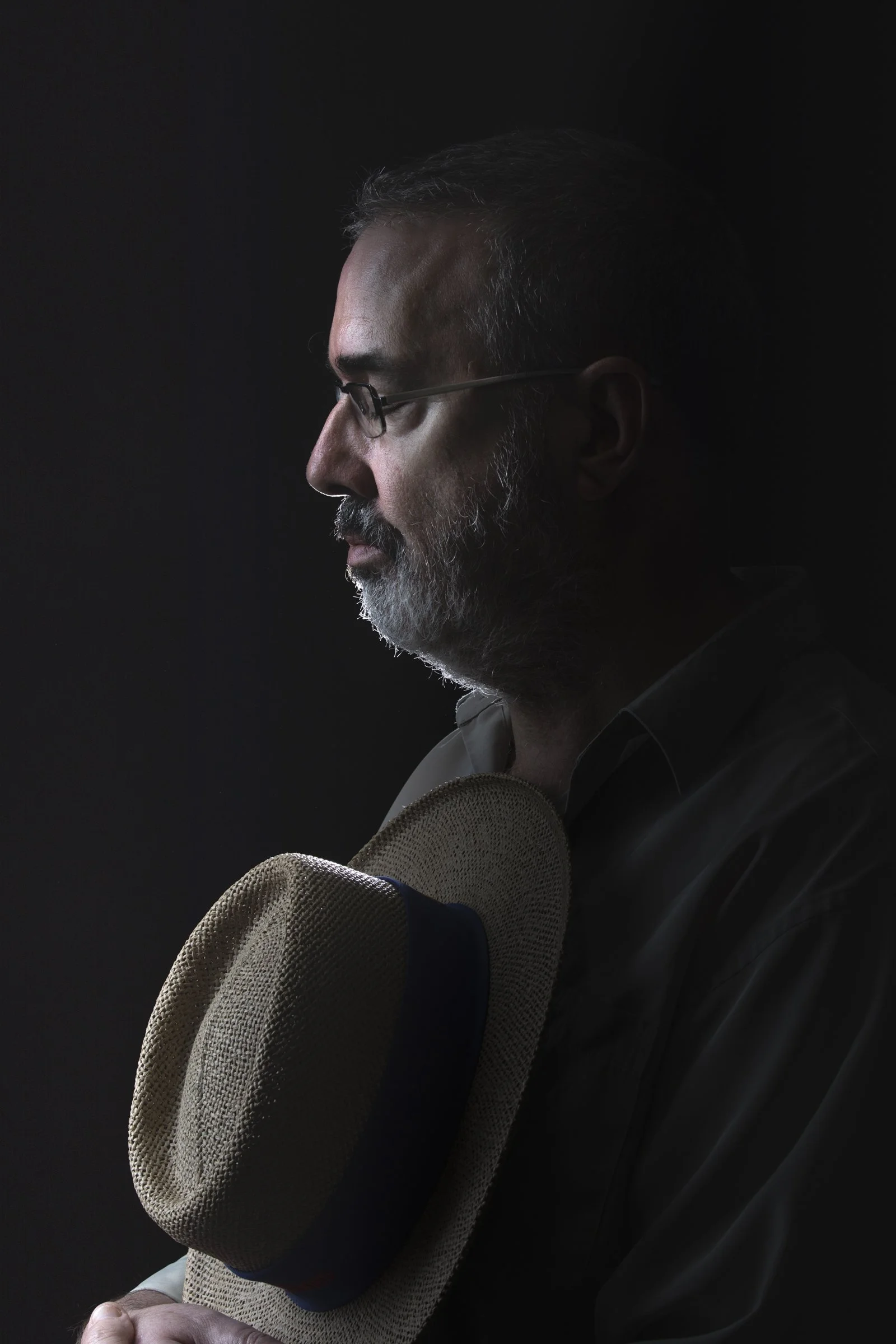
I make three separate and possibly related kinds of work. None of this was deliberate. I did not set out the schema offered in what follows here and say, "Well, sure, let’s now make the artworks."
I just made artworks. Thousands of them, mainly in 2022 and 2023. Now that I have had time to sit down with what I have done, I can do what art school asks you to do, which is to intellectualise one's practice.
The connections between the types of work I do are not immediately obvious. I like dualities; initially I would have instinctively said that I had two kinds of work. But then I remembered that, in addition to collage and paramontage, I also make photomontage. I like the idea of duality because humanity thinks in opposites, but the trinity is the eventual resting place. A stool rests on three legs not two; this is just physics. Try sitting on a two-legged stool and you end up on your back.
Repurposing and sharing
Picasso and Braque adopting or leveraging collage for their Cubist works was intentional, as collage had a long history leading up to the 20th Century. They were borrowing pre-existing authenticity. Collage as a practice goes back at least to the 11th Century and you could even say that mosaic is a kind of collage, but with stone instead of paper. So collage probably goes back to Classical times.
If that is true, collage is more than 2000 years old.
Most collage since then has been an amateur occupation. I started collage in October 2022 in order to have something to do with the Eastern Suburbs Art Group, which I co founded in July of that year. Collage for me originally was to be a communal activity.
The origins of photomontage, on the other hand, lie with Dada, which began in Switzerland around the time of the First World War. The footings of the movement, as it were, to use an architectural metaphor, were in Communism. Paramontage is a portmanteau word invented by Andrew Adair, who was at my school. He is a Canberra poet. The word means “beyond montage”, with “para” the prefix meaning “beyond”.
Paramontage is the combination of images and poetry. Beyond montage. Beyond Dada to the present.
With roots in magic and religion
Later collage took hold in different ways in different minds as a way to understand and communicate understanding of the natural world, in the 17th Century. But originally it included the use of objects to make fetishes and other magical objects, and the pilgrim’s reliques. There were other devotional objects, pieces of the bodies of saints, etcetera.
In the age of scientific categorisation there was in some places in Europe the use of found objects to make display cabinets for general enjoyment. Nowadays people make art from bread and pasta. But in the 18th Century, the age of manufacturing, collagists began to use promotional cards, samples and the like – items stemming from the burgeoning consumer industry of Europe.
This involved the sharing of totems of sensibility, of feeling, among friends, among members of the same family. In the 19th Century the sharing continued with items again derived from the socius, the manufactured world of the consumer. At this time the signification was made by the devoted religious, the lover, the friend. From this community practice emerged the Valentine’s Day card, the ultimate consumer product angled at the world of feelings.
But collage seems to me absolutely fit for our own contemporary age. Collage embodies something about the age of the internet. With digital living and an overwhelming abundance of images, memes, quotations, captions, etc., we are in a sense collage artists every time we go to social media. Every time we do a Google search we are in effect creating a collage in the image search results.
Collage as we have seen breaks down boundaries between people – for example in order to share tokens of feeling. With paramontage, however, you establish a boundary. It sets up a threshold, the step between the visual and the textual. The step between on the one hand line plus colour and on the other hand the realm of symbols. Text is symbolic; visual information is purely sensual. Paramontage is therefore literally a liminal space. The viewer has to decide “Am I going to invest the time needed to read the poem, having consumed in an instant the imagery?”
Paramontage establishes a liminal space
I use old photos, some taken 20 years ago, even in new works. I go out and for a week take hundreds, even thousands of photos, and will use those photos for the next four years, not taking any more. Also to make the paramontage I use poems I wrote sometimes 20 years ago. Again this is just what I feel is right. I have all this material and I honour it by using it again and again. Maybe that’s the point, invoking a sense of reverence by reusing what’s old. Just as the word paramontage is made of two older words. New from old through combination.
An image takes milliseconds to consume but a poem takes three or four minutes. The viewer has to make a decision to cross that boundary, to commit time and effort to consuming the poem. It is a deliberate act to read something, whereas you can inadvertently consume a picture just by glancing sideways as you walk down a hallway. The sensual requires nothing intentional. It is right in your face; you almost can't help seeing it. The symbolic, however, requires a decision in order to expose yourself to it.
In terms of slowing art down, at the MindBodySpirit Festival in Sydney in 2025 the Eastern Suburbs Art Group pioneered a new approach to art that adds even more friction: the combination of art with literature.
Why not try to slow art down?
Sure it was hard to make people understand at first, but there was plenty of interest. Friction that the boundary establishes makes the mind work harder. An artwork should not just be consumed instantaneously, like a meme on Facebook or an ad on TV.
There are many precedents combining art and words, or rather art and text if you prefer. Whichever way you want to verbalise it, there have been people doing this type of combination for a long time. Yes, even with collage, as we have seen. But going from the automatic writing of the 1950s to street art and graffiti, from oriental calligraphy to collage. The religious object, the Egyptian frieze, the illustrated manuscript. The ceremonial stele. The illustrated mystical books of William Blake.
Collage a sort of hybrid spanning across amateur and professional domains, where practitioners whether people at home or artists in their studios embed words in the design of paintings following history going back hundreds of years. Or more if we can remember Su Shi, in Song dynasty China, also known as Su Dongpo. I became familiar with this administrator poet while helping a friend do research for a fine art degree.
Literature is based on symbols and naturally requires education in order to consume, while art is sensual (colour and line). The threshold made in this way is routinely referred to in the art and literature worlds as a liminal space, a space that lies between spaces. Here transformation can happen and transition normally happens. Our lives are often hard and we do not fully engage with what we are doing. We are working hard in a system of production and commerce where we do not often see the meaning of things. To compensate for this difficulty we consume cultural products that are quick to consume. The ease of consumption makes the toil of working life bearable.
But the situation should be reversed
Working life should feel easy. Cultural products should challenge us.
In our day-to-day neither does what it is supposed to do. Our culture industries are bent on supplying us with similar products that are easy to consume because it knows that the allure of these products will be too much to resist. The overproduction of objects, and the commensurate wealth of waste, is killing the planet but instead of fixing the system we distract ourselves with slick songs books movies TV shows that ask nothing of us. An overabundance in the digital realm to match the overabundance in the consumer products realm.
By the time we finish with work family household chores shopping for essentials we are so exhausted confused and upset that the idea of working for meaning in a work of art is unbearable, we just want solace. Ease. Our culture industries another system of overproduction but instead of killing the planet it is killing our spirit. Actually spirit killing prevents us from taking steps to save the planet.
Who has the time, right?
What is missing is the cognitive labour we need to feel fulfilled. We need to slow down. We miss that Aha! moment where meaning hits hard. We slide across the surface of things. We resent blockages instead of trying to understand what they offer us in terms of alternatives.
In fact if we are asked to create that Aha! moment – because we ourselves have to make the decision to create it – we will resist, we will back away, we might feel shame if we fail. We turn to a supply that offers safe rewards, the run of the mill culture machine. We capitulate because the alternative is painful. We are part of the machine.